
Asia's Energy Crisis: The Philippines calls for "regional energy security and resilience" at ASEAN Summit
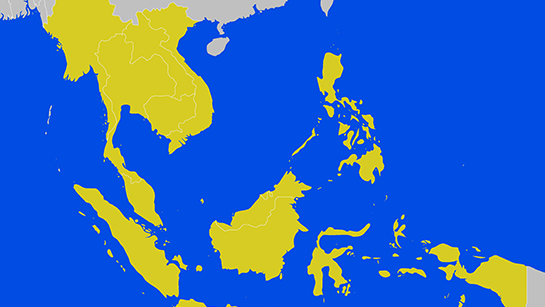
Philippine President Ferdinand Marcos Jr called on ASEAN bloc members to ensure regional energy security and resilience, as he opened the 48th ASEAN Summit Retreat in Cebu on 8 May.
He urged ASEAN members to ensure regional energy security and resilience, saying: “ASEAN must strengthen coordination and reinforce preparedness, [and] pursue practical collective measures to safeguard a stable energy supply and improve interconnectivity, all the while advancing alternative and renewable energy sources to protect our economies from further shocks and to respond to the urgent challenge of climate change.
“We must also harness innovation, including inclusive and responsible applications of AI, to improve energy forecasting, strengthen grid management and system flexibility and support the clean energy transition.”
He called for stronger regional coordination and effective implementation of action plans by the 11 member-nations of Association of Southeast Asian Nations (ASEAN) to better prepare for emerging global risks.
He warned that in an increasingly interconnected world, disruptions in one region can quickly spread across supply chains, financial markets, and the daily lives of people in Southeast Asia.
He said tensions in the Middle East have been deeply felt by Southeast Asian nationals through “higher living costs, supply disruptions, threatened livelihoods, economic strain, [and] growing vulnerability, both in our homelands and amongst our nationals in the Middle East”.
“While the impact may differ from country to country in ASEAN at present, there is no denying that this disruption will have an impact on the future,” he said.
“Even if the tensions de-escalate in time, the damage to critical infrastructure, vital systems, and trust in general will continue to be felt for years to come.”
Mr Marcos also spoke of ASEAN’s collective position, calling for:
The immediate cessation of hostilities
The peaceful settlement of disputes
The protection of civilians and civilian infrastructure
The restoration of safe, unimpeded and continuous transit passage in the Strait of Hormuz
He said it has never been more important to pursue collective action amid geopolitical uncertainties spilling over into the region.
He also made a call for ASEAN cooperation, in order to achieve food security amid geopolitical disruptions.
“Disruptions in trade and transport stemming from the closure of the Strait of Hormuz quickly affected food prices and supply, especially fertilizers, and subsequently, the welfare of our peoples,” he said.
Source: www.asiainsurancereview.com


Comments